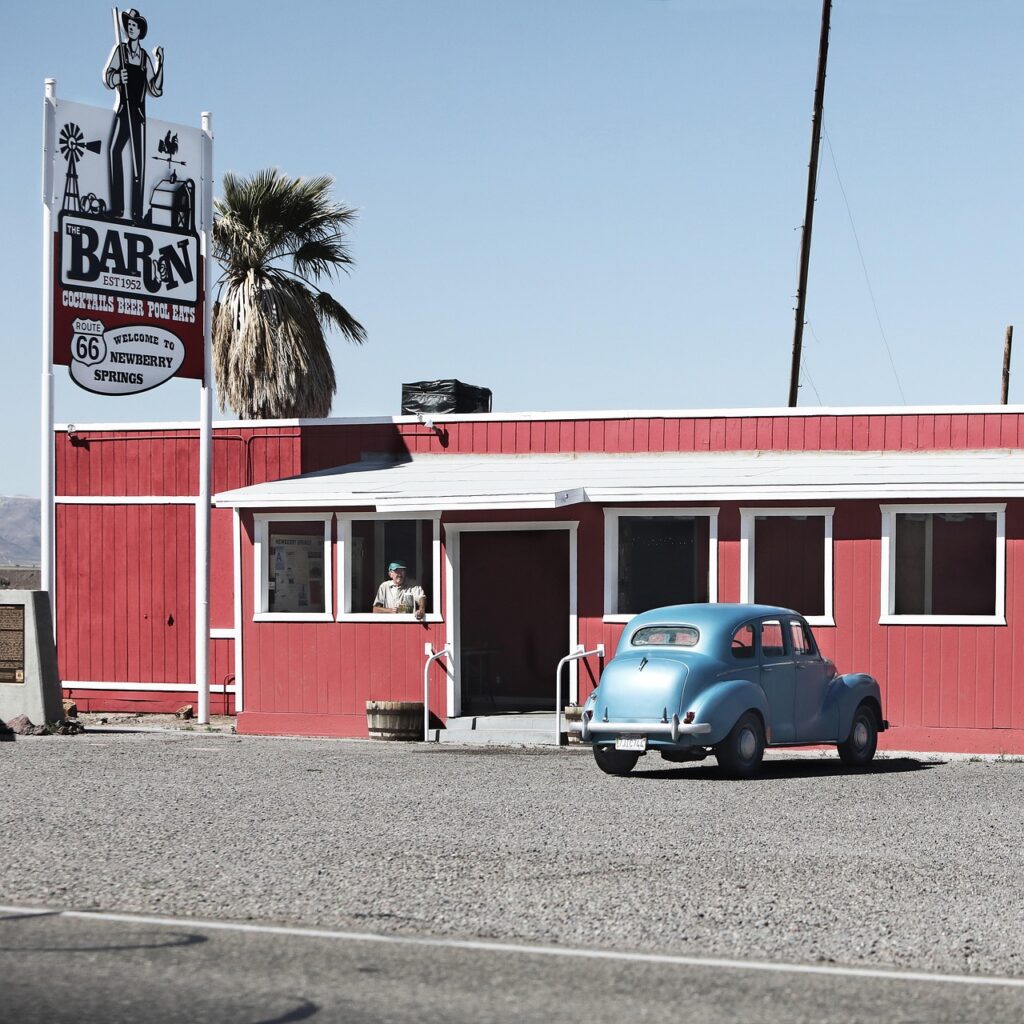



Have you ever noticed that desert cafés all seem to share a specific “look”? Raw plywood counters, polished concrete floors, white-washed walls, and a few carefully placed San Pedro cacti. This isn’t just a trend; it’s a psychological and architectural response to the landscape.
The Philosophy of “Desert Modern”
In the High Desert, the landscape is the protagonist. The architecture is designed to be a frame, not a distraction. This philosophy extends directly into the coffee cup.
The Minimalist Coffee Movement argues that the more “clutter” there is in your environment—both visual and auditory—the less you are able to focus on the sensory nuances of what you are eating or drinking. In a desert café, the “poverty of stimuli” (the lack of bright colors and busy patterns) allows your olfactory system to take center stage.
Sensory Clarity
When you sit in a space made of raw wood and concrete, your brain isn’t busy processing neon signs or wallpaper. It’s free to notice the faint scent of jasmine in a washed Kenia coffee or the blueberry notes in a natural-process Yirgacheffe.
Architectural Materials in Coffee Culture:
- Concrete: Keeps the space cool in the 100-degree heat and provides a neutral “anchor” for the ritual.
- Plywood/Raw Pine: Adds a touch of organic warmth that mirrors the dried brush of the Mojave.
- Glass: Large windows bring the “outside in,” reminding the drinker that they are part of a vast, ancient ecosystem.
Minimalism in the desert is about stripping away the “noise” until all that’s left is the bean, the water, and the view.